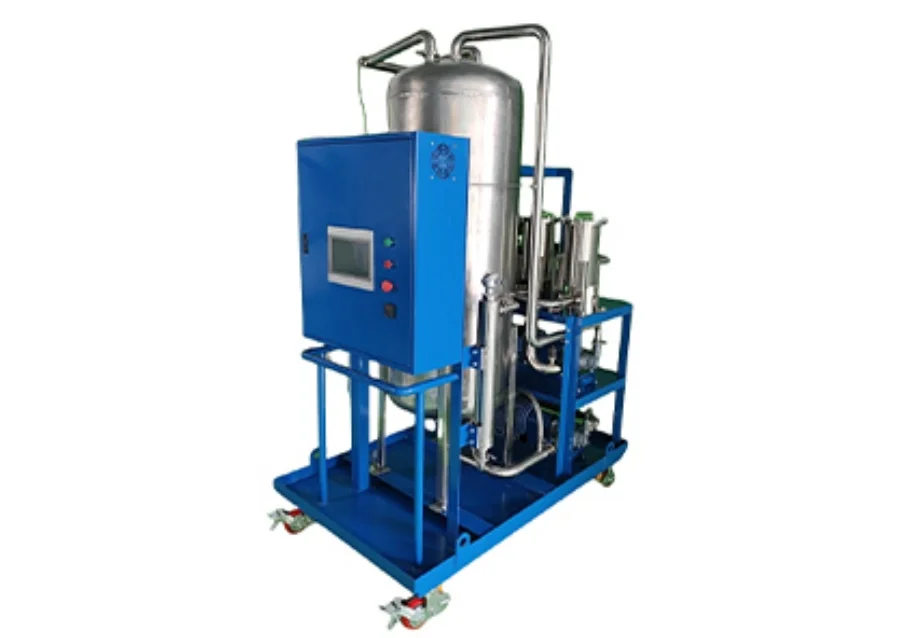
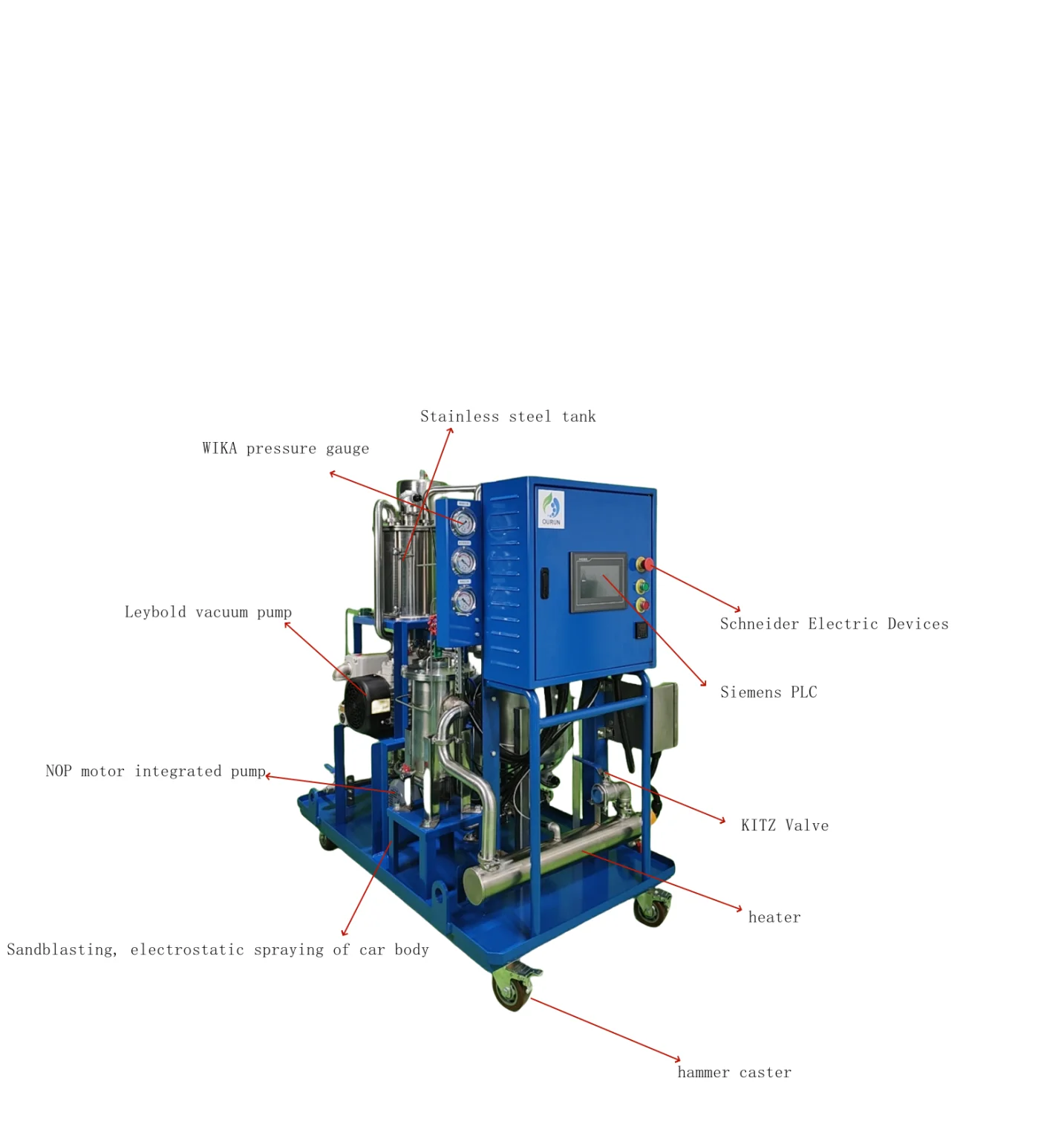
Transformers are built tough, but even the strongest unit has a weak spot: the oil. If the oil’s contaminated, the whole system is at risk. That’s why transformer oil purification is one of the smartest investments you can make. Instead of tossing out old oil and replacing it, filtration machines clean it up and bring it back to life. It’s cheaper, faster, and way better for the environment. Let’s break down how it works. 1. Why Oil Gets Contaminated Day…
Here’s the thing about transformers: they can look rock-solid on the outside, but their reliability often comes down to something you don’t see—the oil inside. Transformer oil does two critical jobs. It insulates high-voltage components so electricity doesn’t jump where it shouldn’t, and it carries heat away so the unit doesn’t cook itself. The problem? Oil doesn’t stay “good” forever. Over time it picks up moisture, dirt, and gases, and it slowly loses the ability to protect the transformer. That’s…
I. The Particle Crisis in Advanced Tech Semiconductors: 13nm particles crashing chip yields (Intel case study) Biologics: 0.1 EU/mL endotoxin limits requiring USP <797> compliance Data: 22% batch failures in pharma traced to filter incompatibility (PDA Journal) II. Material Selection for Ultra-Purity Contamination Control Matrix: Contaminant Material Solution Validation Method Silicone oils Platinum-cured silicone GC-MS extractables Oligomers Virgin PES membranes Non-volatile residue Metal ions Ultra-low leachate PP ICP-MS (ppb detection) III. Microelectronics Filtration Deep Dive CMP Slurry Filtration Protocol: Pre-Filtration:…
I. The Hidden Cost of Standard Filters in Industry Problem: 68% of equipment downtime in refineries links to incompatible filters (McKinsey data) Case Study: Petrochemical plant reduced maintenance costs by $220k/year after switching to acid-resistant PEEK cartridges Visual: Infographic comparing standard vs. custom cartridge lifecycle costs II. Material Science Masterclass A. Extreme Environment Materials Material Max Temp Chemical Resistance Ideal Use Case 316L Sintered SS 900°F Conc. acids Battery acid production PPS Membrane 400°F Solvents, bases Solvent recovery Titanium Alloy 1100°F Seawater, chlorine Offshore rigs B. Filtration Media Innovations Nanofiber Coatings: 0.1µm absolute rating with 40% lower ΔP Gradient Density Designs: 5-layer progressive filtration capturing 98% of sub-5µm particles III. Industry-Specific Engineering Protocols Oil & Gas Workflow: Fluid Analysis (viscosity, particulate load) Mechanical Simulation (FEA for 10,000 PSI systems) Validation Testing (ASTM F838, API RP 1581) Field Monitoring (IoT pressure sensors tracking real-time clogging) Pharmaceutical Case: Problem: Protein loss in bioreactors Solution: Hydrophilized PVDF cartridges with 0.2µm asymmetric membranes Result: 99.99% retention, $1.2M/year product recovery IV. Compliance Framework Global Standards Crosswalk: ASME BPE vs. EHEDG vs. 3-A Sanitary Standards Certification Roadmap: From prototype to…
As a certified fluid power specialist with over 15 years of field engineering experience, I can attest that oil contamination remains the primary root cause (accounting for 70 - 80% of documented failures) in hydraulic system degradation. This isn't merely a maintenance concern but a critical reliability engineering issue that impacts mean time between failures (MTBF), total cost of ownership (TCO), and operational safety. The technical solution lies in implementing properly specified filtration systems tailored to specific contamination profiles. 1. Contamination Mechanisms: Understanding the Failure Modes Oil contamination manifests through three primary vectors, each with distinct degradation pathways: Particulate ingress: Solid contaminants (ISO 4406 code 21/19/16 and above) act as abrasive media, inducing three - body wear in precision clearances (typically 5 - 25μm in servo valves). This results in increased internal leakage, pressure droop, and eventual spool seizure. Metallographic analysis of failed components frequently reveals embedded particles exceeding 10μm in critical lubrication interfaces. Moisture ingress: Free water (exceeding 200ppm) disrupts the hydrodynamic lubricating film, promoting corrosive wear via electrochemical reactions. Emulsified water accelerates additive depletion, particularly in anti -…
As a technical engineer with over a decade of experience in the hydraulic system field, I've witnessed countless equipment breakdowns caused by oil contamination. Just last week, I handled an emergency repair at an automotive stamping plant – a million - dollar hydraulic press suddenly shut down. When we disassembled it, we found three deep scratches on the servo valve spool caused by metal particles, and the cost of replacing parts and the loss from downtime exceeded 200,000 yuan. Such cases are by no means rare in the industry. 1. Don't Be Fooled by Appearances: 70% of Failures Have Their Roots in Oil Many of my peers rush to replace pumps and valves when they hear equipment making abnormal noises or notice unstable pressure, but they overlook the most basic oil testing. The data analysis from our laboratory over the past three years shows that 70% of hydraulic system failures can be directly traced to oil contamination. Excessive moisture can cause the oil film to break, accelerating component rust; solid particles can wear the mating surfaces like sandpaper, leading to…
Industrial System Filters: Advanced Technologies and Long-Term Performance Assurance Industrial production is changing fast, and along with that, we need filtration systems that work well and you can count on more than ever. Industrial system filters aren’t just simple parts anymore—they’re a mix of really cool technologies that are at the center of cleaning up fluids and gases. How well they work directly affects how smoothly production goes, how good the end products are, and even if the whole production line is safe. I’ve been working in filtration and studying it for years, and I can say for sure that modern industrial system filters are getting better at doing their job, lasting longer, and even working more smartly. Let’s check out the advanced technologies that make them work and how they keep performing well for a long time. Advanced Technologies Powering Industrial System Filters Industrial system filters keep getting better, and that’s all because of a bunch of advanced technologies. These technologies cover everything from how the filter is designed to how it’s made, and each step is all about…
Custom System Filters: Engineering Excellence for Optimal Filtration Performance In industrial filtration, the one-size-fits-all approach is quickly becoming a thing of the past. Systems are getting more advanced, and operational needs are growing more specific. That's why custom system filters are now more necessary than ever. These aren't just regular parts; they're key to making operations efficient, reliable, and compliant. Let's break down the technical details, design methods, and performance benefits that make custom system filters what they are. Drawing on years of industry experience, we'll show just how important they are in today's industrial world. The Engineering Fundamentals of Custom Filtration Creating custom system filters starts with a strict engineering process. First, we need to thoroughly analyze the operating environment. This means figuring out the contaminant profiles—like the size, chemical makeup, and concentration of particles. We also look at operational factors such as flow rates, pressure differences, temperature ranges, and how thick the fluid is. All this information forms the basis of the filter design. It tells us which filter media to use, what materials to make the…