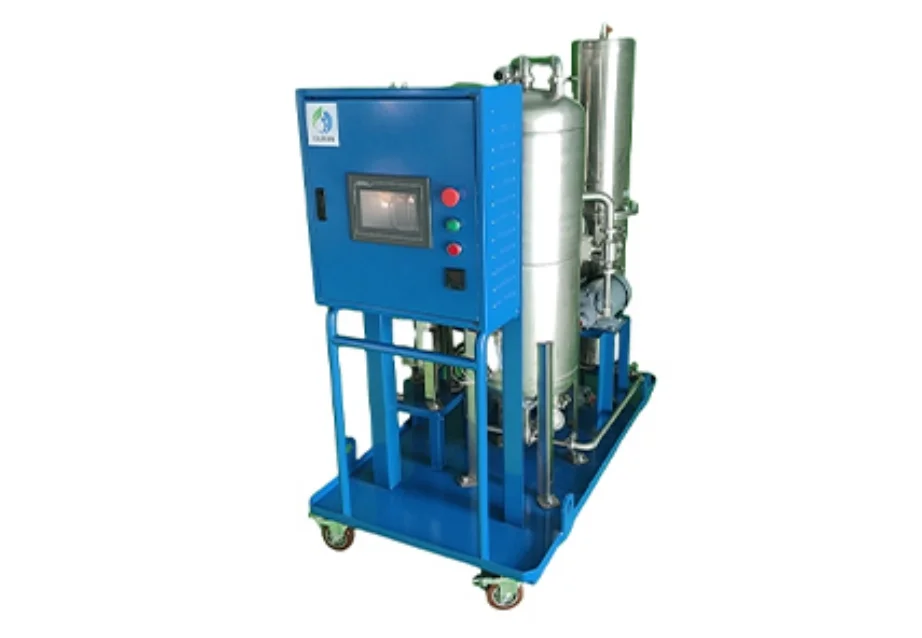
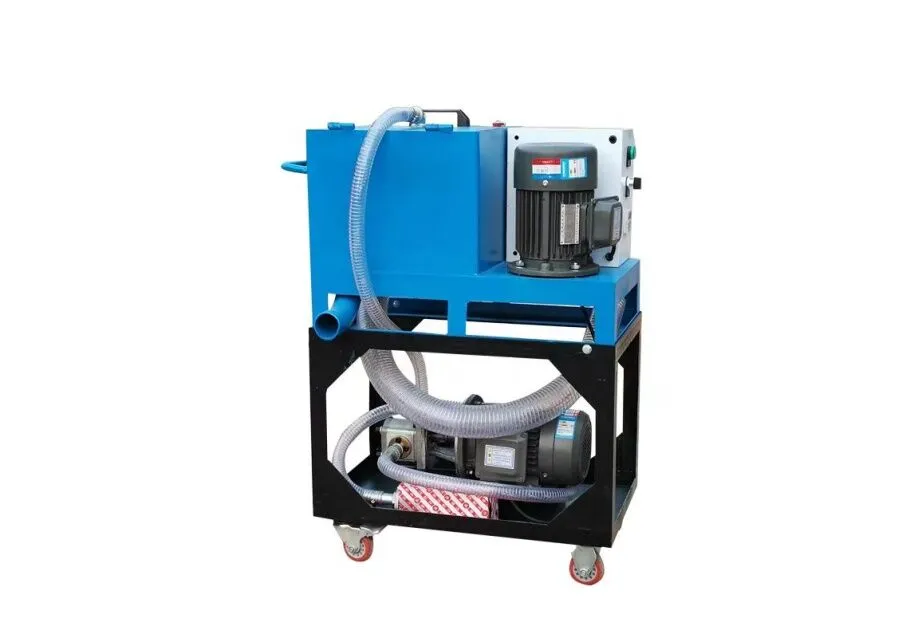
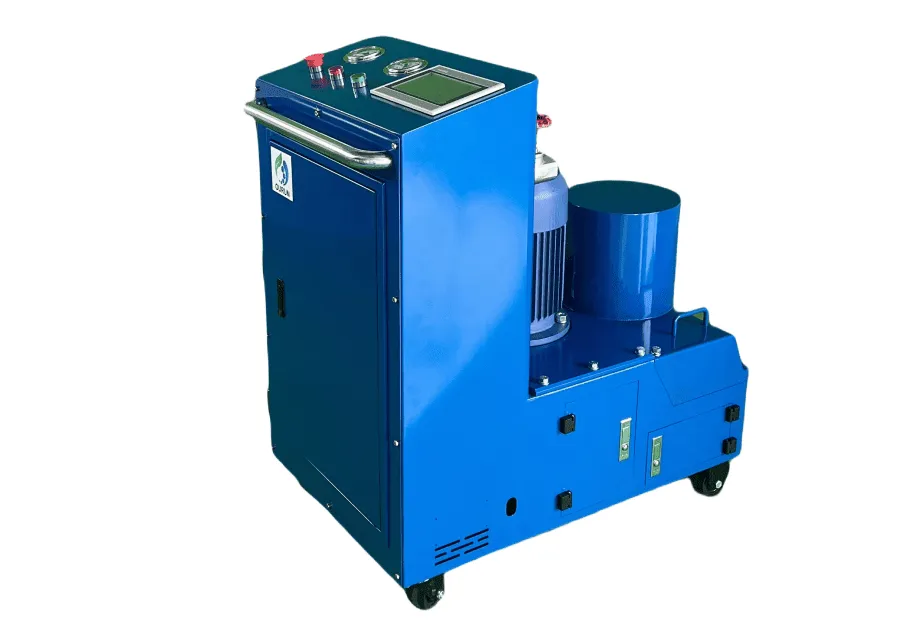
Introduction You rely on heavy machinery every day in your operations, whether it's powering a factory floor or keeping turbines spinning smoothly. When oils in those systems get contaminated with water, particles, or gases, things go wrong fast—downtime hits, repairs pile up, and costs climb. That's where oil filtration machines step in. These devices clean insulating and lubricating oils right at the source, pulling out impurities that could shorten equipment life or spark failures. Imagine restoring oil to like-new condition…
Centrifugal oil purifiers crank up industrial gear efficiency by whirling oil at 8000+ rpm to fling out junk like water, dirt, and bubbles—no clunky filters needed, so less mess and fixes. Ourun’s tough machines tackle thick oils up to 680 mm²/s, hitting super-clean levels (NSA1638 5–7) with barely any water left (≤0.010%), keeping turbines, ships, and factory machines humming longer and cheaper with fast cycles and auto-drain. The Physics Behind Centrifugal Separation Centrifugal oil filters work using a cool…
Centrifugal oil filters, like those from Ou Run, zap contaminants from oil using high-speed spinning—think 8000 rpm or more—to fling heavy stuff like metal bits and water to the drum’s edge, leaving clean oil in the center. Unlike traditional filters, they don’t need constant replacement parts, saving cash and downtime. With tough rotors, smart PLC controls, and big dirt-holding buckets, they keep hydraulic systems, diesel engines, and marine gear running smooth and long-lasting. Fundamentals of Centrifugal Filtration Technology Principles…
How to Extend the Life of Your Equipment with Proper Hydraulic Cylinder Care Proper hydraulic cylinder maintenance prevents costly breakdowns, boosts machine efficiency, and extends equipment life. Regular checks, clean oil, and quality parts from trusted suppliers like Ourun ensure smooth operation, fewer repairs, and reliable performance in tough conditions like construction or farming. Neglecting Cylinder Care Leads to Costly Downtime and Repairs Hydraulic cylinders are key parts in heavy machines. They’re used in construction, farming, and factories. If you skip caring for them, trouble comes fast. Machines can stop working suddenly. This causes long delays. Emergency fixes cost a lot too. The hydraulic system needs all parts in good shape to run well. A tiny problem, like a worn seal or dirty oil, can grow big if ignored. Work delays don’t just slow you down. They raise costs for workers and repairs. Fixing things after they break is pricier than regular care. Keeping cylinders in good condition stops these issues. It also makes machines last much longer. Well-Maintained Cylinders Improve System Efficiency and Performance Hydraulic systems need steady pressure…
Lubricant Purification Technology: The "Invisible Guardian" of Modern Industry—Why It’s a Global R&D Focus? In the global manufacturing, energy production, and transportation sectors, industrial machinery acts like a "beating heart," while lubricating oil is the "blood" that keeps this heart pumping. Beyond reducing friction between mechanical components, dissipating heat from operation, and preventing metal corrosion, it also removes tiny impurities—functions that directly determine equipment lifespan and operational stability. Yet a critical challenge persists: lubricating oil is highly susceptible to contamination during use. Once impurities mix into the oil, they not only accelerate equipment wear but also trigger unplanned downtime, forcing businesses to bear high maintenance costs and even safety hazards. Traditionally, companies relied on "scheduled oil changes": replacing oil at fixed intervals regardless of its actual condition. This approach is costly (new oil procurement expenses are significant) and environmentally harmful—improper disposal of used oil pollutes soil and water, while refining new oil consumes massive energy. Today, the global industrial sector is shifting to a more efficient mindset: transforming lubricating oil from a "disposable consumable" into a "recyclable resource". Advanced…
In the high-speed realm of precision machining, every micron matters. Oil purification serves not only as the foundation for equipment stability but also as a core support for achieving zero tolerances in high-volume production. By continuously removing contaminants, water, and air bubbles from oils, it delivers clean lubrication to machine tools, ensuring machining accuracy remains within strictly controlled limits. Oil Purification: Why Does High-Volume Machining Demand Such Extreme Accuracy? Even the Smallest Variance Can Derail Mass Production In busy machining settings, where plants churn out thousands of matching pieces daily, a tiny slip in measurements can cause big trouble. Just a small mistake, even as small as a micron, in one part can mess up the whole production line. This leads to parts that don’t fit, more items getting rejected, and expensive fixes. This is super important in fields like aerospace, cars, and gadgets, where being exact isn’t just about making things well—it’s about keeping things safe and working right.A single faulty component can cause equipment failures, risking accidents or downtime (Source: Pioneer Service Inc, pioneerserviceinc.com). When you’re dealing with…
Article 2: The Economic and Environmental Benefits of Lubricant Reconditioning In industrial operations, lubricant cost management has always been a complex issue. Traditionally, lubricants have been simply viewed as consumables requiring regular replacement, but this perspective is undergoing fundamental changes. This article provides a deep analysis of the economic benefits and environmental value brought by advanced lubricant purification technologies, helping enterprises reconsider the strategic significance of lubricant management. Recalculating the True Cost of Lubricants To understand the value of lubricant reconditioning, we must first fully recognize the true cost of the traditional "use-and-replace" model. This cost goes far beyond the price of new oil, including: Direct Costs High-quality lubricants, particularly synthetic oils, are expensive. For companies with large consumption volumes, this represents a substantial annual expenditure. But more important are the accompanying indirect costs. Downtime Costs Lubricant replacement requires equipment shutdown. For continuous process industries, hourly downtime losses can reach tens or even hundreds of thousands of dollars. This cost is often underestimated but actually represents the largest hidden expense. Disposal Costs Used lubricants are classified as hazardous waste, requiring…
What Makes Centrifuge Diesel Oil Filters Essential in Modern Engines? Let’s face it—diesel engines are the backbone of many industries, powering everything from heavy trucks to massive ships. But keeping them running smoothly isn’t just about fuel or maintenance; it’s about clean oil. Without proper filtration, dirt and grime can sneak into your engine, causing big problems down the road. This article dives into why oil filtration matters so much today, how it works, and why solutions like Ourun and Centrifugal Oil Purifier are worth your attention. Stick around to learn how to protect your engine and save money! The Role of Oil Filtration in Engine Performance and Longevity Diesel engines are made to be tough and strong. Yet, their ability to keep going depends a lot on having clean oil. Oil doesn’t just make parts slide smoothly. It also cools things down, cuts down on wear, and carries away dirt to the filter. If filtration isn’t good, junk like soot, tiny metal bits, and carbon buildup can pile up. This speeds up damage and shortens the engine’s life.…