

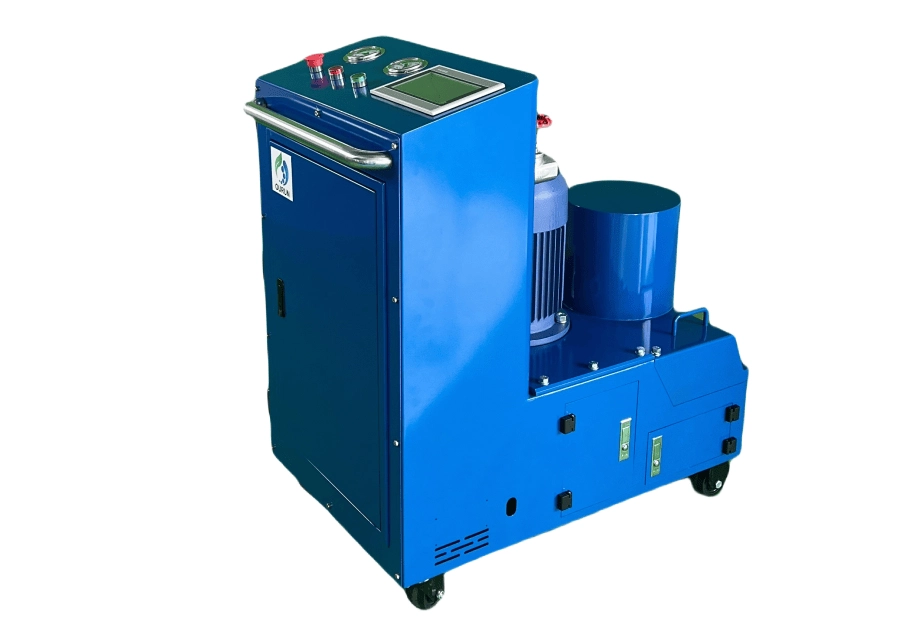
If you face regular valve sticking or pump breakdowns, know that many others deal with this too. Industrial workers often spot oil contamination as an issue. Yet, plenty overlook the exact type of problem. Water isn’t simply water once it mixes into your hydraulic setup. It shifts forms. Each version demands a unique method to maintain smooth operations.
Before exploring the details, remember that selecting a reliable expert familiar with real factory challenges matters a lot. Ourun stands out as a skilled specialist. They go beyond selling basic units. Instead, they create custom lubrication solutions. This applies whether your work involves metallurgy, wind energy, or vehicle production. Their approach aims to lower expenses by extending oil life to three to five years, rather than just two. Built with careful engineering from Germany and Japan, these setups reduce power consumption and equipment stops. They feature flexible designs tailored to your facility’s requirements.
Why Water is the Hidden Killer in Your System
You may notice your oil appears somewhat hazy and dismiss it as a small concern. But data from seal failure studies indicate that roughly 40% of such problems tie straight to inadequate oil purity. Water entering the system does more than occupy space. It sparks a series of damaging effects. Specifically, it speeds up seal degradation, causes hot spots, and weakens the protective layer that prevents metal parts from rubbing together harshly.
A major risk involves “three-body abrasive wear.” This occurs when tough bits and water drops get caught between a seal and a sliding part. In hydraulic lines, even small debris sized 5 to 15 microns can lodge into rubber seals. As a result, they form groove-like scratches that cause leaks. Allowing water to linger leads to additives separating from the oil. Consequently, your costly fluid becomes a harmful mixture that damages your resources.
State 1: Free Water – The Heavy Threat
Free water represents the simplest type of impurity. In a settled oil sample within a container, it appears as a distinct layer at the base or a clear separation. Sources include damaged seals, cleaning sprays, or tank moisture buildup. Though it seems straightforward to address, this form mainly triggers corrosion and sudden pump issues.
For swiftly managing substantial amounts of free water, basic paper filters fall short. Instead, opt for a technique that applies mechanical action to eject the water from the oil.
Removing Free Water with Centrifugal Power
In scenarios with large oil volumes or ongoing water entry, centrifugal separation proves most effective. It relies on density differences. Water, being denser than oil, gets flung outward by a rapidly rotating drum, along with heavy solids, while purified oil remains in the core.
The OURUN-KOR-60S exemplifies this approach. It combines vacuum and centrifugal forces, offering a key benefit since it avoids using disposable filter materials. Thus, you skip ongoing purchases and replacements of costly filters. Moreover, it processes various oil viscosities, from light hydraulic types to heavy gear lubricants, and its drum accommodates more than 1kg of debris before requiring maintenance.
State 2: Emulsified Water – The Milky Sabotage
When your oil resembles a creamy beverage or a frothy mixture, that’s emulsified water. Here, pumps and intense flows have blended the water finely into the oil. The tiny droplets remain dispersed and resist settling through natural means alone.
This phase poses the greatest hazard to equipment. Emulsified mixtures lack strong lubrication properties. They fail to bear loads in bearings or gears properly. This results in quick temperature rises and direct metal contact. Ordinary filters quickly block with this sticky blend, and settling tanks offer no help. Therefore, choose a method that disrupts the connection between oil and water at a molecular level.
State 3: Dissolved Water – The Invisible Humidity
Dissolved water hides best of all. The oil can seem crystal clear and golden, but it might carry hidden moisture. Similar to how air retains unseen vapor until conditions change, oil absorbs dissolved water until temperatures fall. During overnight cooling, this moisture condenses into free water, restarting corrosion within delicate parts.
To achieve superior purity—particularly water levels under 50 ppm—you rely on warmth combined with reduced pressure.
Vacuum Dehydration for Deep Purity
Vacuum dehydration reduces water’s boiling temperature. Inside a sealed chamber, the low pressure allows water to vaporize at modest heat levels (about 45-50°C), safeguarding the oil from degradation or unwanted reactions. Only this technique effectively eliminates dissolved water.
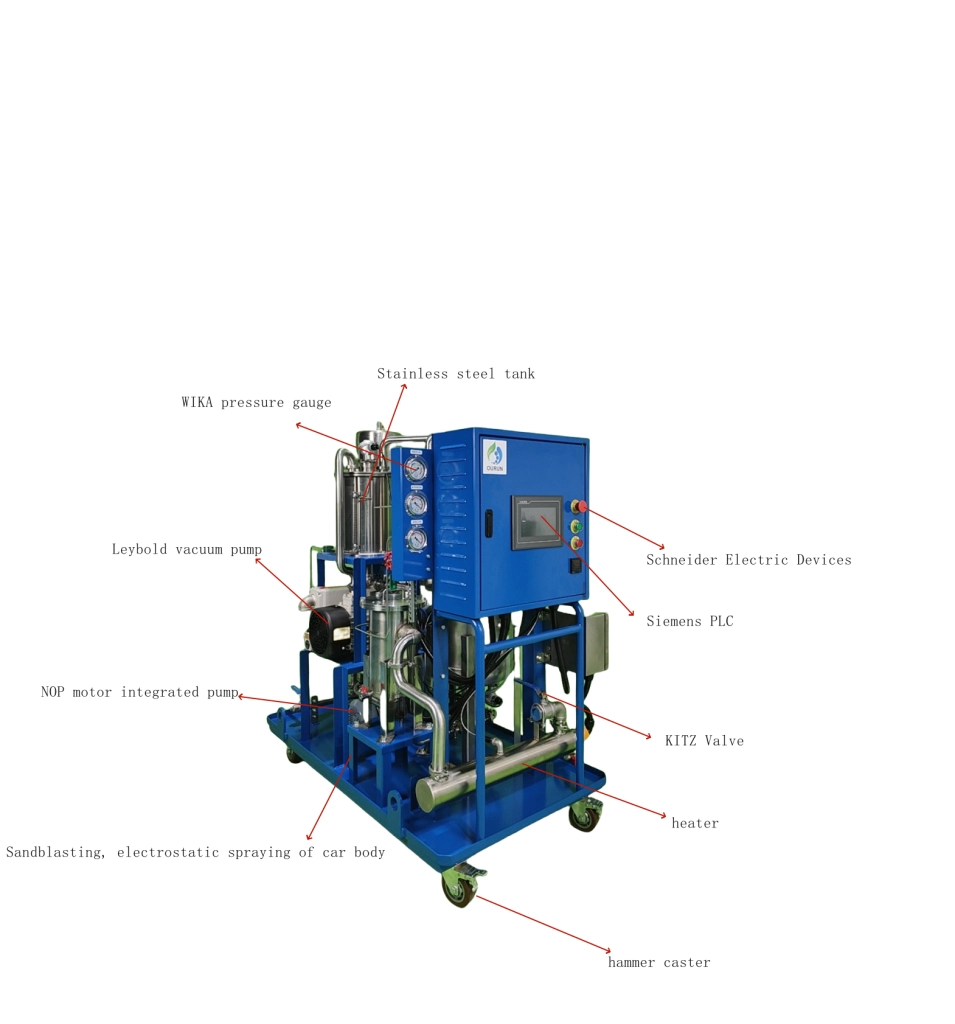
In precision systems where minimal moisture spells trouble, the OURUN-KORS-308C serves as the go-to choice. It eliminates all free water and most dissolved water. Its strength lies in achieving NAS 1638 Class 5 or 7 cleanliness while removing moisture. Advanced filter components capture fine particles overlooked by basic ones, thus protecting servo valves and fast pumps.
The Financial Math: Clean Oil vs. Frequent Failure
Oil care goes beyond routine tasks; it forms a smart business tactic. Shifting from contaminated to pure oil transforms system longevity. Insights from specialists like Noria suggest that upgrading from NAS 8 to NAS 3 cleanliness can quadruple equipment lifespan.
The following comparison, drawn from common factory scenarios, illustrates the return on investment from effective filtration.
Table 1: Maintenance Impact of Oil Cleanliness (Annual Estimates)
| Factor | Dirty Oil (ISO 22/20/17) | Clean Oil (ISO 16/14/11) | Improvement |
|---|---|---|---|
| Leakage Rate | 11.3 mL/min | 0.5 mL/min | 22x Reduction |
| Repair Frequency | High (Related to 80% of failures) | Low (Reduced by 45%+) | Significant |
| Oil Change Interval | Every 2 years | 3 to 5 years | 1.5x – 2.5x Extension |
| Unplanned Downtime | High Risk | 80% Reduction | Major Profit Boost |
With dedicated purification tools, a firm producing 10 million units yearly can gain 50,000 to 100,000 in savings per avoided shutdown.
Grasping Cleanliness Standards
To align with your team’s discussions, grasp the basics of measurement. Standards like ISO 4406 or NAS 1638 quantify particle counts in oil precisely.
Table 2: Typical Oil Cleanliness Targets by Component
| Component Type | Target ISO Code (Lower is Better) | Critical Particle Size |
|---|---|---|
| Servo Valves | 15/13/11 | < 4μm (c) |
| High Pressure Pumps | 17/15/13 | < 6μm (c) |
| General Hydraulics | 19/17/14 | < 14μm (c) |
| Low Pressure Systems | 21/19/16 | 15μm+ |
Dropping one ISO level (say, from 18 to 17) roughly halves the dirt quantity in the oil.
Practical Maintenance Strategies
Managing oil requires no advanced knowledge. Begin by ensuring incoming oil stays dry and free of contaminants. Surprisingly, fresh oil often arrives dirtier than expected. Next, install superior tank vents to block initial moisture entry. Lastly, incorporate bypass or continuous filtration units.
For sizable oil reservoirs (reaching 18 cubic meters) hit by flooding, avoid discarding the fluid. A robust vacuum setup can revive it to original quality at a small fraction of replacement costs. Such recovery not only cuts expenses but also supports eco-friendly practices by minimizing waste.
FAQs
Q: Can I use a regular paper filter to remove water from my hydraulic oil?
A: No. Typical paper filters target solid debris. Certain water-removal variants exist, but their capacity stays limited. They block rapidly with emulsified or free water. Centrifugal or vacuum methods work far better for moisture control.
Q: Is it really cheaper to clean old oil than to buy new oil?
A: Absolutely, by a wide margin. Restoring used oil to fresh standards costs around one-third of new fluid’s price. Factoring in avoided disposal and repair savings, payback occurs within 6 to 12 months.
Q: How often should I test my oil for water content?
A: In vital hydraulic operations, test every 500 hours. But in damp settings or upon noticing haze, inspect right away. Today’s purifiers often feature live sensors for water and particles.