

Introduction
Oil Filters are easy to buy, but not always easy to choose. Many buyers see the words synthetic and regular, then assume the higher priced option must be the better one. In a small workshop, that guess may only cost a few dollars. In a hydraulic station, steel mill, power plant, cement line, or machining shop, the same guess can affect oil life, seal wear, pump condition, and the number of times your team has to stop work for maintenance.
The real question is not only whether the filter is synthetic or regular. You need to know what the oil is carrying, how clean the oil must be, how fast the oil moves through the system, and whether the problem is only solid particles or a mix of water, air, sludge, and fine metal dust. Maintenance staff know this feeling well. A tank of oil may look dark, yet the viscosity is still acceptable; another oil sample may look fairly clean, but the particle count is already high.
Ourun is a factory focused on industrial oil purification equipment and lubrication management systems. Based in Shenyang Sino German Equipment Manufacturing Industrial Park, it combines R&D, production, and sales for users in metallurgy, automotive manufacturing, chemical plants, power generation, cement, paper production, and machinery processing. Its work is not about selling a general filter and walking away. It is about helping you keep oil cleaner, reduce needless oil replacement, and protect machines that usually fail at the worst possible time.
What Does Synthetic Mean in Oil Filtration?
Synthetic oil and a synthetic oil filter are two different things. Synthetic oil describes the oil itself, while a synthetic filter usually refers to the media inside the element. That media may use glass fiber, polyester, polypropylene, or a blended fiber structure. A regular filter often uses cellulose, paper based material, or a simple mixed media design.
This is where many purchasing mistakes start. A machine using synthetic oil does not always need a synthetic filter. At the same time, a system using mineral oil may still need a high grade synthetic media filter if the oil carries fine particles, water, or heavy contamination.
Media matters more than the label
The filter media decides how particles are captured and how oil passes through the element. A regular cellulose filter can be good enough for light work, short service intervals, and low contamination. It is also cheaper, which matters when the machine is simple and the risk is low.
Synthetic media is usually more even in structure. It can hold fine particles better and often keeps a steadier flow as dirt builds up. This is why many long interval systems and heavy duty machines use advanced filter media. The filter has to catch dirt, but it must not choke the oil line.
Oil type is only one part of the choice
If you only choose by oil type, the result can be wrong. You also need to check oil viscosity, working temperature, pressure, flow rate, contamination source, and the target cleanliness grade. A hydraulic system that runs 46# oil at high flow has different needs from a gearbox with slow moving heavy oil.
This may sound like a small technical detail, but it is the kind of detail that saves a Friday night emergency call. A cheap filter that clogs too soon can push oil into bypass. A filter that is too fine may slow flow if it was not selected correctly. Both problems leave the machine less protected.
How Synthetic and Regular Oil Filters Compare
The difference between synthetic and regular Oil Filters is mainly seen in four areas: filtration efficiency, dirt holding capacity, flow stability, and service life. These points are more useful than the product label on its own.
Filtration efficiency
Filtration efficiency tells you how well the filter removes particles of a certain size. Large dirt is easy to notice, but many harmful particles are too small for the eye to see. In many industrial systems, fine particles can pass through gaps, damage seal lips, scratch valve surfaces, and wear pump parts slowly.
Regular filters can remove common dirt and larger debris. For light duty use, that may be enough. Synthetic media often performs better with fine particles, especially when the oil needs to stay clean for a longer period. In hydraulic and lubrication systems, this can help reduce wear before it becomes a visible problem.
Dirt holding capacity
Dirt holding capacity means how much contamination the filter can collect before pressure drop rises too much. A filter with low capacity may look fine when new, but it can become blocked quickly in dirty oil. Once the element loads up, the system may need more frequent changes, or worse, oil may pass through a bypass route.
For plants with metal wear debris, outdoor dust, old oil tanks, or poor tank sealing, this capacity is not a small matter. It affects labor time, spare parts planning, and the number of times equipment must be checked.
Flow stability
Good filtration should not starve the system. Hydraulic machines need oil flow to move cylinders, protect pumps, and keep valves working as designed. If the filter is too restrictive, the pump works harder and system response may drop. If the filter is too open, particles keep moving through the circuit.
This is why micron rating alone is not enough. You need to match the element with viscosity, pressure, flow rate, and working condition. A clean oil target is useful, but the system still needs to breathe, so to speak.
What Oil Cleanliness Data Tells You
Oil contamination is not only a dirty oil problem. It becomes a wear problem, a leakage problem, and finally a downtime problem. In seal systems, solid particles are especially harmful because they cut the oil film and create small scratches on rubber or metal surfaces.
A test comparing seal wear under different ISO 4406 cleanliness levels shows how fast the damage grows after 200 hours of operation.
|
Oil cleanliness level |
Condition |
Running time |
Seal wear depth |
Leakage |
|
ISO 4406 16/14/11 |
Clean |
200 h |
8.7 μm |
0.7 mL/min |
|
ISO 4406 18/16/13 |
Light contamination |
200 h |
21.5 μm |
2.8 mL/min |
|
ISO 4406 20/18/15 |
Moderate contamination |
200 h |
43.2 μm |
7.6 mL/min |
|
ISO 4406 22/20/17 |
Heavy contamination |
200 h |
68.9 μm |
11.3 mL/min |
The table is not hard to read. As oil gets dirtier, seal wear rises, and leakage rises with it. A clean oil sample at ISO 4406 16/14/11 had 0.7 mL/min leakage after 200 hours. A heavily contaminated sample at ISO 4406 22/20/17 reached 11.3 mL/min. That is more than a number on paper. In a real workshop, it can mean oil on the floor, lower pressure, a hot pump, and a mechanic wiping the same fitting again and again.
When a Filter Element Is Not Enough
Oil Filters are useful, but they do not solve every oil problem. A standard element mainly handles solid particles. Industrial oil often has a messier mix: free water, dissolved water, air bubbles, sludge, varnish, oxidized material, and fine metal powder. If you keep changing filter elements but the oil becomes dirty again quickly, the problem may sit deeper in the tank and circuit.
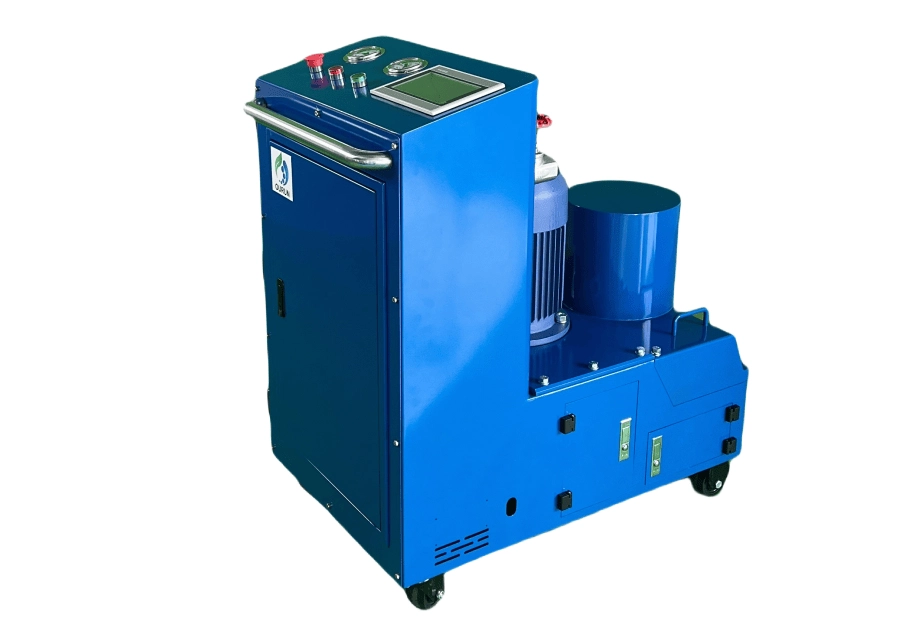
This is where a full purification process can be a better choice. The High-Performance Oil Filter is designed for industrial online filtration in lubrication systems and hydraulic systems. It uses a centrifugal vacuum method to remove solid suspension, water, and air from oil. That is different from simply catching particles in a replaceable element.
Why the KOR-60S fits mixed contamination
The KOR-60S is made for real plant conditions, not a clean brochure room. It can reach NAS1638 5 to 7 cleanliness depending on site conditions, with moisture content controlled at ≤0.010%. It is suitable for oil viscosity up to 680 cSt, has a dirt holding capacity above 1 kg, and for 46# hydraulic oil, the outlet flow can reach at least 60 L/min.
These details matter when you are treating an oil station, not a small sample bottle. A machine with PLC intelligent control and automatic drainage also reduces manual work. Nobody wants oil treatment to become another job that needs constant babysitting.
When precision elements make more sense
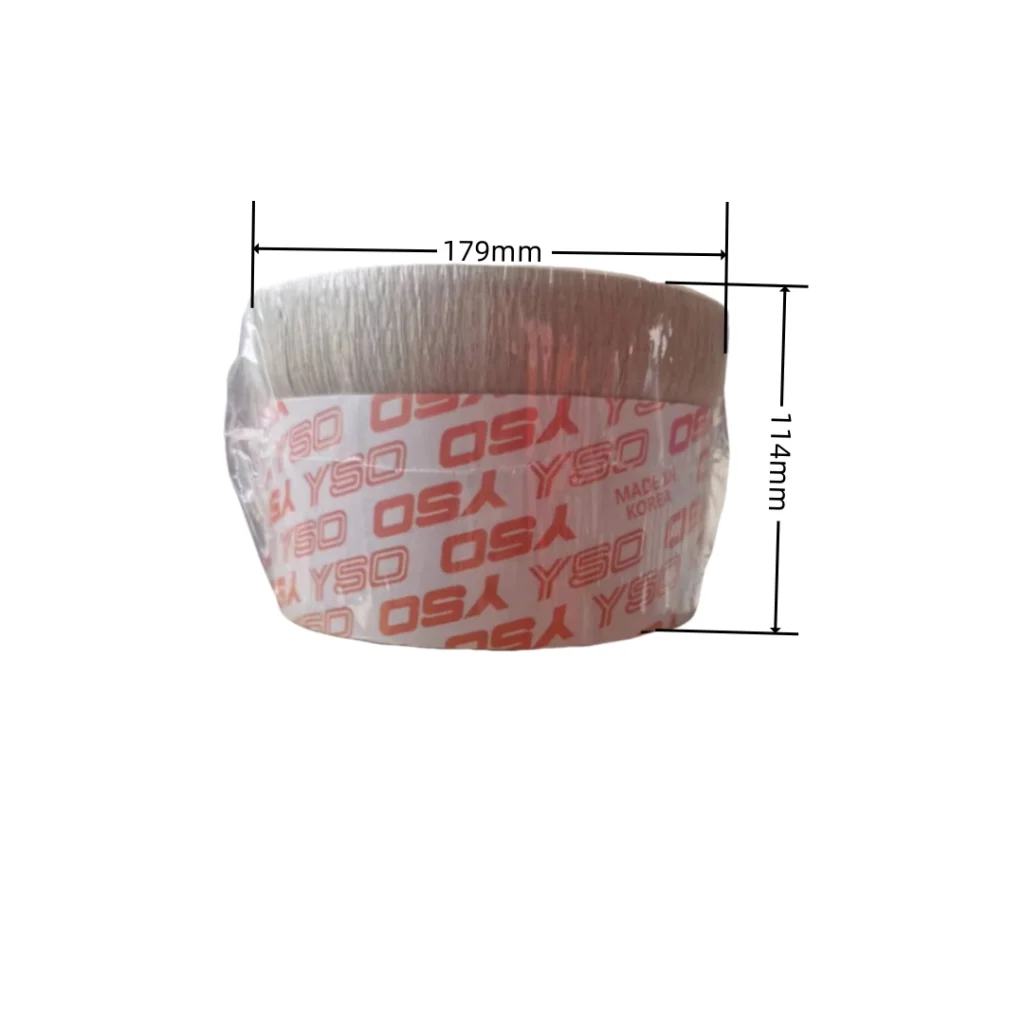
If your main issue is fine solids rather than large water contamination, Advanced Precision Oil Filter Elements may be the more direct choice. These elements use multi stage filtration and a density gradient structure to remove micrometer level solids, moisture caused by temperature change, and oxidation byproducts that may remain in normal filtration.
This is useful in hydraulic and transmission systems where fine particles can wear valves and seals long before any operator sees dirt in the oil. A small particle does not look dramatic, but it does patient damage.
How to Choose the Right Setup for Your Site
A good choice starts with the oil, the machine, and the failure pattern. A stamping press, a wind turbine gearbox, a transformer, and a machining center do not share the same oil risk. The right plan should come from the condition of the oil, not from a fixed sales line.
Start with the contamination source
First check the oil type. It may be hydraulic oil, gear oil, turbine oil, transformer oil, compressor oil, coolant, or another industrial fluid. Then check what is entering the oil. Is it metal wear from gears or bearings? Dust from an open workshop? Condensation from temperature swings? Aging oil products? Dirt left inside the tank after a rushed oil change?
If the oil mainly carries fine solid particles, a precision element may be enough. If there is water, air, and particles together, a centrifugal vacuum oil purifier is usually more suitable. If the oil condition is not clear, test it before replacing a whole tank. Many plants have thrown away usable oil because the color looked bad, while the real issue was particle pollution that could be reduced by filtration.
Match the equipment to the maintenance goal
|
Maintenance concern |
Better choice |
Why it fits |
|
Fine metal particles in hydraulic oil |
Precision filter element |
It targets small solids that damage valves and seals |
|
Water, air, and particles mixed together |
Centrifugal vacuum oil purifier |
It treats several common oil problems in one process |
|
Frequent filter blockage |
Higher capacity media or oil purification |
It reduces repeated element changes |
|
Dark oil but normal viscosity |
Oil testing plus filtration |
It helps avoid needless full oil replacement |
|
Large oil station with heavy contamination |
KOR-60S type purifier |
It gives higher flow and stronger dirt handling |
For project selection, the solution center can help match the equipment to oil type, tank size, and contamination pattern. For spare parts, maintenance advice, or model selection, the service team is a useful starting point because field details often change the answer.
Conclusion
Synthetic and regular Oil Filters differ in media structure, fine particle control, dirt capacity, flow behavior, and service life. Regular filters still have a place in standard work and short service intervals. Synthetic media or advanced elements are better suited to systems that need cleaner oil for longer periods.
For industrial users, the smarter question is what is wrong with the oil. If the oil has fine particles, choose stronger precision filtration. If it also carries water, air, sludge, or repeated heavy dirt, a centrifugal vacuum purifier is often the better route. Clean oil costs money, but dirty oil takes it quietly through wear, leakage, labor, and downtime. For a specific working condition, you can contact the technical team before the next oil change becomes another expensive guess.
FAQ
Q: Do Oil Filters work the same way in vehicles and industrial hydraulic systems?
A: No. Vehicle filters usually follow set service intervals, while industrial hydraulic systems must deal with pressure, flow, viscosity, particle count, and target cleanliness. The risk is also higher because one dirty hydraulic station can affect a full production line.
Q: Can a regular filter be used with synthetic oil?
A: Yes, if the filter meets the system requirement and service interval. The oil type alone does not decide the filter. You still need to check contamination level, oil flow, working temperature, and the equipment maker’s requirement.
Q: When should a plant use an oil purifier instead of only replacing filter elements?
A: A plant should use an oil purifier when the oil contains water, air, sludge, oxidation products, or repeated heavy contamination. A filter element mainly captures solids, while a purifier can treat several oil problems at the same time.