

Dark hydraulic oil often makes you think: “Should the whole tank be replaced now?” Not always. Before you spend money on new oil, you should check whether the real problem is oxidation, particles, foam, or water. In many plants, OURUN-KORS-70 can be a better choice when the oil still has usable base properties but needs dehydration and purification.
Ourun is a factory focused on industrial lubrication and oil purification equipment. It is located in Shenyang Sino-German Equipment Manufacturing Industrial Park and works on R&D, production, and sales of lubrication management systems. For plant managers, that matters. You are not only buying a machine; you are asking someone to help protect pumps, valves, seals, bearings, and production time. Its service team provides pre-sales technical support, installation guidance, operation training, 24-hour online support, one-year warranty, and long-term maintenance support.
Dark Hydraulic Oil Signals and First Checks
Dark oil is a warning sign, not a final verdict. A maintenance worker may see oil turn from light yellow to brown after two years and feel pressure from both sides: replacing oil is expensive, but ignoring bad oil may damage equipment. The smarter route is simple: inspect first, test next, then decide.
Color Change Versus Oil Failure
Oil color can darken because of heat, oxidation, additive change, fine particles, varnish, or long service time. That does not mean the oil has fully failed. In one hydraulic station case from the uploaded material, the oil changed from light yellow to dark brown after two years. The operators worried about machine damage and waste from blind replacement. Lab tests showed that key physical and chemical indexes such as acid value, viscosity, and copper corrosion had not reached the replacement limit. The real issue was particle contamination, which reached NAS 12, a serious level. The recommendation was filtration, not full-tank replacement.
That case is useful because it matches daily plant reality. You may not have a laboratory beside the workshop, and the oil sample bottle may look scary under bad lighting. Still, color alone should not decide a costly shutdown.
Milky Oil Versus Dark Oil
Dark oil and milky oil point to different risks. Dark oil often suggests oxidation or particle loading. Milky or cloudy oil usually points to water or air. Water is especially dangerous in hydraulic systems because it weakens lubrication, supports rust, speeds additive breakdown, and can cause unstable pressure.
If your hydraulic oil looks dark but clear, test it before replacement. If it looks milky, foamy, or cloudy, treat water as a priority. The vacuum purification principle is valuable here because vacuum treatment can remove moisture, gas, and other impurities from oil, improving purity and service performance. The uploaded technical document also notes that vacuum oil purification is commonly used in power, petroleum, chemical, hydraulic, lubricating, and cooling oil applications to remove metal particles, moisture, and colloids.
Oil Test Data Before Replacement
Once color raises suspicion, data should take over. You do not need to make the decision by eye. A practical oil test should answer four questions: Has the oil oxidized? Has viscosity moved too far? Is there water? Are particles damaging the system?
Viscosity, Acid Value, and Corrosion
Viscosity tells you whether the oil can still form a reliable lubricating film. If it becomes too thin, wear rises. If it becomes too thick, pumps work harder and response becomes slow. Acid value gives a clue about oxidation and oil aging. Copper corrosion shows whether the oil may attack metal surfaces.
In the dark-oil case mentioned above, those core indexes had not crossed the replacement limit, so replacing all oil would have been wasteful. That is a key lesson for your maintenance plan. If the base oil is still usable, purification may recover performance at lower cost. If viscosity, acid value, oxidation, or corrosion are already beyond limits, filtration alone may not be enough.
A good habit is to keep a simple oil log: oil fill date, operating hours, color notes, water test, particle count, filter change date, and any pressure alarms. It sounds boring. But after two shutdowns, even a small notebook near the hydraulic station starts to look like a pretty good investment.
Particle Count, Water, and Foam
Particle contamination is not just “dirty oil.” It can cut seals, block small channels, break oil film, raise friction, and trigger leaks. The uploaded seal-cleanliness material states that about 40% of industrial seal failures are directly related to poor oil cleanliness. It also reports that 5–15 μm particles can embed in rubber seals and form plow-like wear marks. When particles above 5 μm increased from 1,000 to 5,000 particles/mL, O-ring wear rose 2.8 times. Repeated particle impact may shorten seal life by 40% to 60%.
The same material gives another hard number: when a seal gap grows from 0.05 mm to 0.1 mm, hydraulic oil leakage may rise 3 to 5 times. That is the kind of small mechanical change you do not see during a walkaround inspection, but you will see it later as oil loss, pressure drift, and messy floors.
Water and foam make things worse. Fine particles under 3 μm can settle in lubrication oil passages, reducing lubrication efficiency. Foam also affects particle counters, so oil testing should be done carefully, especially when temperature, flow, and pressure are unstable.
Filtration and Water Removal Decisions
When test data shows serious particles or water but the oil still has usable core properties, filtration and dehydration often make more sense than replacement. You keep the value of existing oil, lower disposal pressure, and reduce the chance of introducing new contamination during refilling.
Contamination Removal and Oil Reuse
A filtration decision is not just about saving oil. It is about stopping a chain reaction. Dirty oil damages seals. Damaged seals leak. Leakage reduces pressure stability. Pressure instability hurts production. Then people blame the pump, the valve, or the operator. Sometimes the oil was the quiet cause from the beginning.
The profit-focused uploaded document states that 80% of hydraulic system failures are related to oil contamination, and professional filtration equipment can reduce contamination-related repair frequency and cost by more than 45% on average. It also notes that regular purification can reduce unplanned downtime caused by contamination by 80%, while a cleaner hydraulic system may improve working efficiency by 3% to 5%.
That is why dark hydraulic oil should not be handled with a simple “change it” rule. If the oil has a particle problem, remove particles. If it has a water problem, remove water. If it has both, choose equipment that handles both.
OURUN-KORS-70 for Water and Particle Control
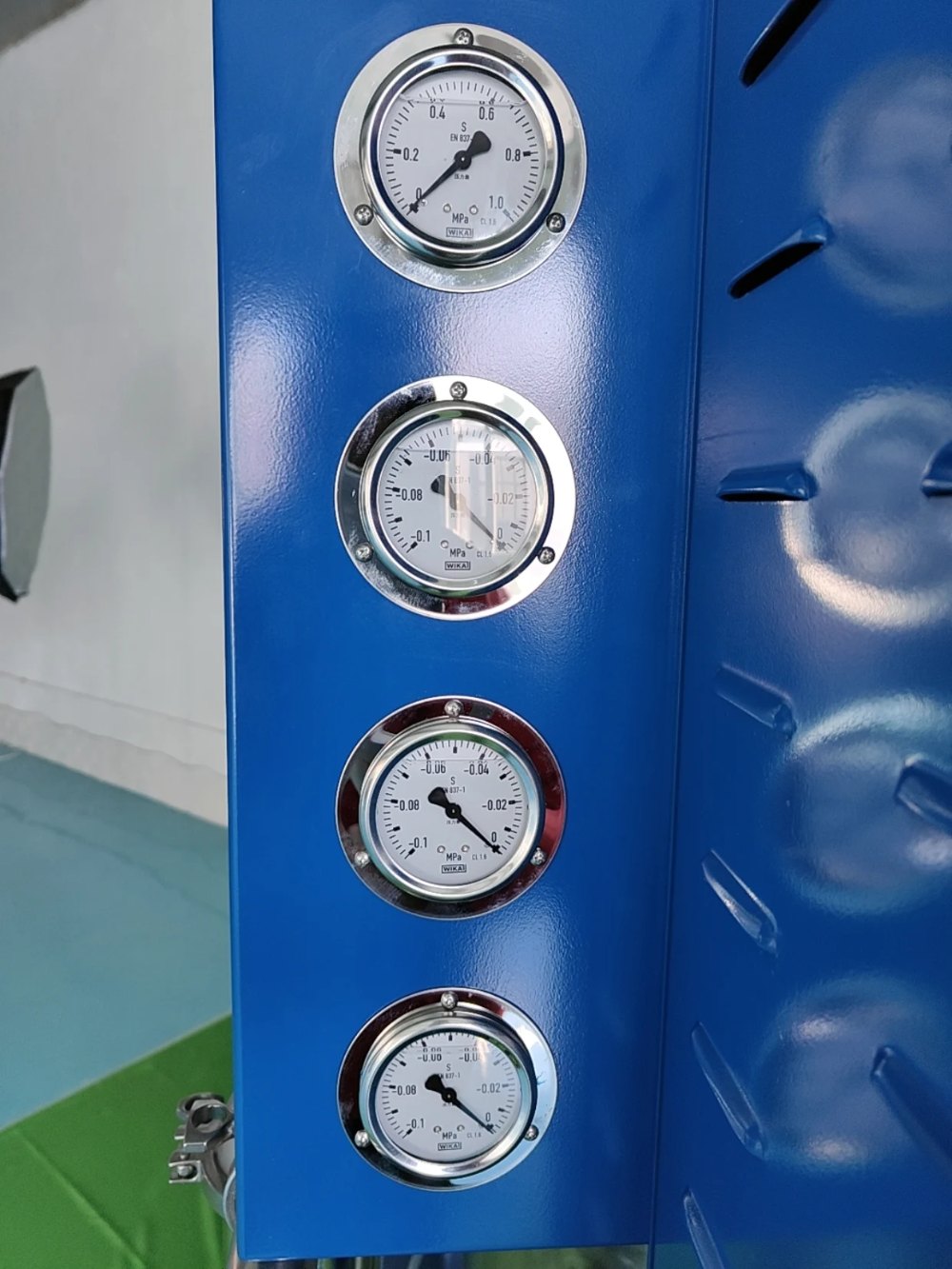
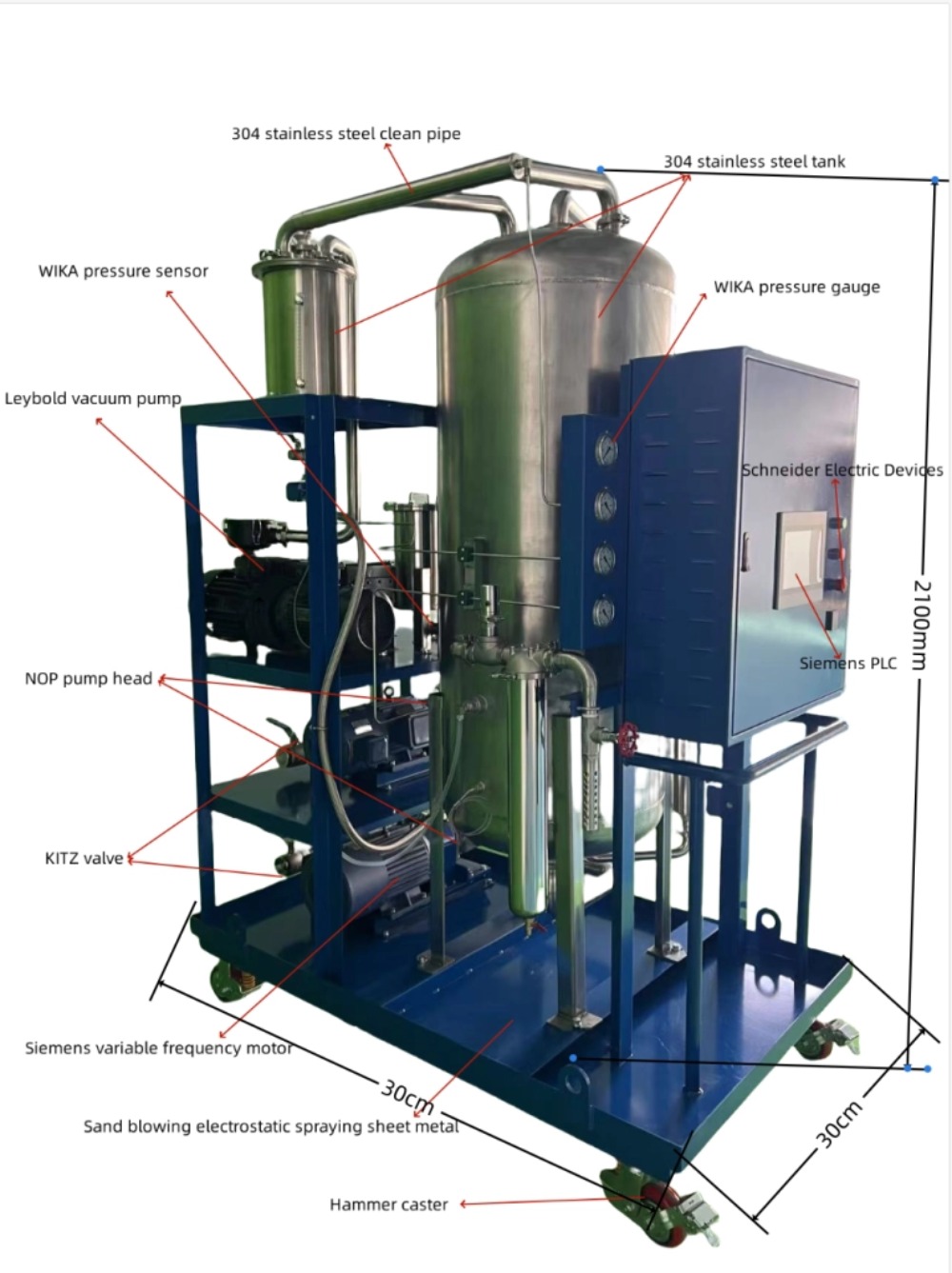
The OURUN-KORS-70 is designed for working conditions with large water inflow. Oil passes through a vacuum environment, where water is gasified and discharged from the oil. The product page lists use in hydraulic oil, gear oil, turbine oil, transformer oil, compressor oil, and equipment lubrication systems.
For a plant dealing with dark hydraulic oil and possible water contamination, OURUN-KORS-70 gives you several practical advantages. Its listed water removal capacity is 100% for free water, 100% for bubbles in oil, and 80% for dissolved water. It can handle oil viscosity up to 680 cSt, uses PLC intelligent control, has optional heating, and uses 304 stainless steel pipelines and vacuum tanks. The treated moisture content is listed as ≤50 ppm, with a flow of 70 L/min and application for oil stations up to 18 m³.
Those numbers matter when you are not dealing with a small lab sample, but a real hydraulic station that must return to service.
Ourun Support for Cleaner Hydraulic Oil
Choosing purification equipment should start with your oil problem, not the machine catalog. You need to know oil type, tank volume, viscosity, water level, particle level, working temperature, and the target cleanliness grade. Then the machine choice becomes much clearer.
Factory Service and Quality Checks
The factory service page says every filter machine goes through filtration effect testing before delivery, with a transparent and traceable independent test report. It also states that production follows 12 standardized quality inspection procedures, combining automated monitoring and manual re-checks. For industrial buyers, this is not a decorative detail. It affects acceptance, commissioning, and long-term confidence in the equipment.
If you are comparing full replacement with purification, ask for a practical plan: current oil condition, target moisture, target cleanliness, running time, and maintenance steps after treatment. You can also ask about installation guidance and operator training through the technical service page.
Custom Oil Purification Solution
Every hydraulic system has its own headache. A steel mill may care about high temperature and dust. A power plant may worry about moisture and insulation performance. A cement plant may fight heavy particles every week. The custom solution center is useful when you need a purification setup based on oil type and working site, not a generic answer.
If your oil is dark because of particles, water, and foam, OURUN-KORS-70 is worth reviewing before ordering new oil. If test data shows severe oxidation or failed additives, replacement may still be needed. But for many systems, filtering first is the calmer and cheaper move. To check the right path, send your oil type, tank size, viscosity, water content, particle count, and photos to the team. OURUN-KORS-70 can then be matched to the real condition, not guessed from oil color alone.
FAQ
Q: Does dark hydraulic oil always need replacement?
A: No. Dark color is a warning, not a final decision. Test viscosity, acid value, corrosion, water, and particle count first. If the base oil is still acceptable but particles or water are high, filtration may be the better step.
Q: When is OURUN-KORS-70 suitable for hydraulic oil?
A: OURUN-KORS-70 is suitable when hydraulic oil has water contamination, bubbles, high moisture, or mixed contamination and still has reusable oil value. It is especially useful for systems that need vacuum dehydration and steady purification.
Q: What information should you provide before asking about OURUN-KORS-70?
A: Provide oil type, tank volume, viscosity, current water content, particle count or cleanliness grade, oil temperature, operating hours, and photos of the oil. These details help match the machine to the real site condition.