

Introduction
Picture this: you’re troubleshooting a hydraulic excavator that’s sputtering mid-job, oil pressure flickering like a bad omen. That nagging contamination—dust from the site, metal shavings from wear—has turned your reliable beast into a headache. You’ve patched seals, flushed lines, but the root issue lingers, costing hours and dollars. Sound familiar? In the trenches of construction or manufacturing, clean hydraulic oil isn’t a luxury; it’s the lifeline that keeps deadlines met and crews paid.
That’s where Ourun steps in, a game-changer crafted by engineers who’ve sweated through the same battles you face daily. Forget generic fixes—these are purpose-built purifiers that anticipate your needs, from portable rigs that chase you to remote sites to inline systems that guard your reservoirs like sentinels. Drawing from decades in heavy industry, their designs prioritize what you value: rugged durability that laughs off vibrations, smart sensors that ping alerts to your phone, and efficiency that reclaims oil you’d otherwise dump. One client in oilfields slashed disposal runs by 40%, turning waste into workflow. Another in auto plants saw pump failures drop to zero after integrating their precision units. It’s human-scale innovation—no fluff, just tools that fit your grit, your schedule, your budget. If downtime’s your enemy, their arsenal arms you to win, quietly boosting ROI while you focus on the build. Dive deeper; it’s the edge pros like you swear by.
Let’s get real. Contaminants in your hydraulic oil build up fast, from ingress during refills to internal erosion. They spike wear, erode efficiency, and invite failures that cascade. But effective filtration methods exist to counter them. We’ll dive into the top three—mechanical, bypass, and centrifugal—explaining how each targets threats and integrates into your routine. You’ll see practical ties to tools that amplify their impact, helping you choose setups that match your pace and protect your investment.
Top Methods for Filtering Hydraulic Oil
Hydraulic systems power your world, but oil degradation threatens them all. Particles as small as 5 microns can score surfaces; water fosters rust. Filtration methods rise to this, each excelling at capture and removal. Start with mechanical for immediate barriers, then layer bypass for refinement, and centrifugal for robust separation. These build on each other, creating defenses tailored to your demands. Let’s break them down so you can apply them tomorrow.
Mechanical Filtration: Your First Line of Defense
Mechanical filtration catches solids right where they enter—think return lines or suction strains. Porous elements, often pleated paper or wire mesh, trap debris as oil passes through. You select micron ratings based on needs: 10 microns for general use, 3 for precision work.
This method suits constant-flow operations like presses or lifts. Install inline, monitor differential pressure, and replace elements when it climbs—simple swaps keep you running. It prevents 70-80% of abrasive damage upfront, sparing pumps and valves from early graves.
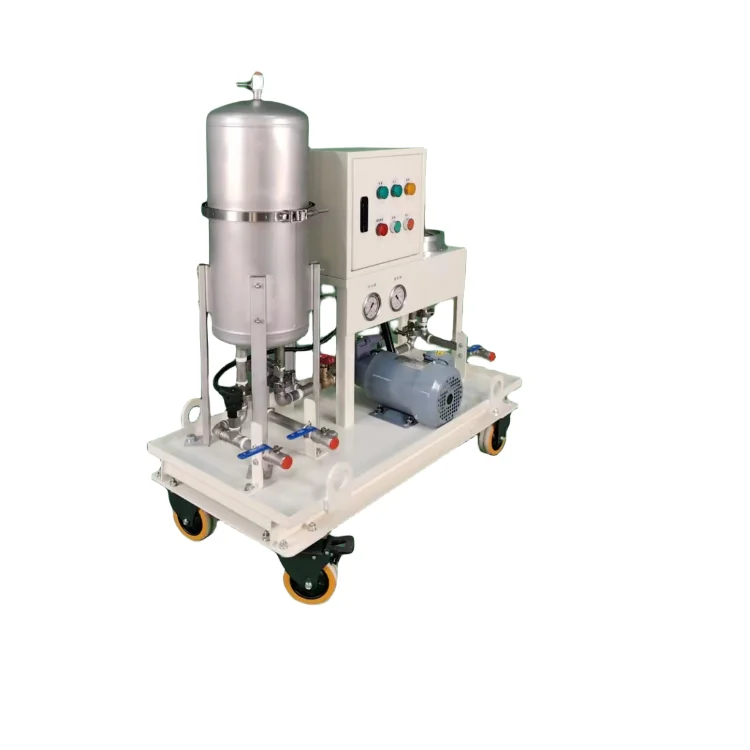
Elevate it with a dedicated unit for deeper cleaning. The IOP Series Precision Oil Purifier delivers exactly that: compact, multi-grade elements that refine to 1 micron, pulling contaminants offline or inline. Connect it to your reservoir during breaks; it cycles fluid at 20-100 liters per minute, restoring NAS 7 cleanliness in passes. Field techs praise its quiet operation—no shop roar—and how it extends element life to 2,000 hours. For you, racing against shifts, it means proactive cleans that cut unplanned stops by half. Budget $2,000-5,000 upfront; savings hit $10,000 yearly in avoided repairs.
Mechanical sets the foundation, but finer threats like varnish slip past. Bypass filtration follows naturally, polishing what basics miss without halting your flow.
Bypass Filtration: Deep Clean Without the Downtime
With mechanical in place, bypass takes over for thoroughness. It siphons 5-15% of your oil volume into a side loop, where high-capacity media absorbs dissolved gunk and ultra-fines. Main circulation continues; treated oil rejoins seamlessly.
Ideal for extended runs in mills or fleets, it targets oxidation products that cloud oil and gum actuators. Run it continuously at low flows—10 liters per minute—or batch during lulls. Results show: fluid acidity drops 50%, varnish layers thin, and ISO codes improve two grades.
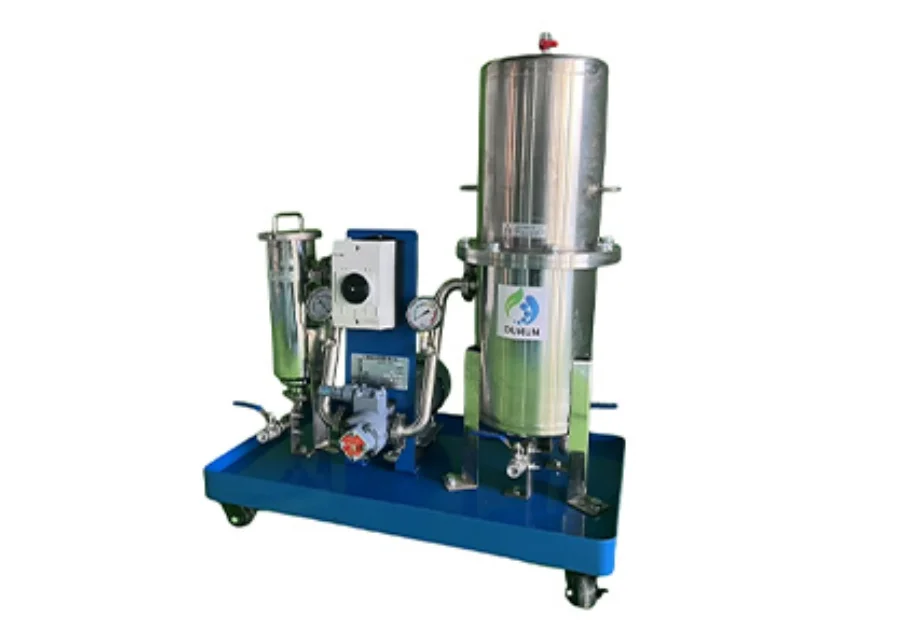
Portability shines here for varied sites. Grab a Portable Oil Filtration Equipment unit; its wheeled frame and quick-connects let you wheel it to any machine. Powered by 110V or 220V, it bypasses at adjustable rates, with heaters for cold starts and vacuums for degassing. A mining crew used one to revive gear oil post-rain, reclaiming 200 liters unfit for drain. You benefit from its 99% particle removal and water stripping, all in a package under 50 kg—tow it solo, deploy in minutes. Costs start at $1,500; payback comes via 3x longer oil intervals.
Bypass refines, yet heavy emulsions overwhelm it. Centrifugal filtration steps up then, using physics to eject bulk without media.
Centrifugal Filtration: Power Through the Heavy Hitters
Centrifugal builds on prior layers by spinning oil at 7,000 RPM, flinging denser contaminants—solids, water droplets—to the periphery. Clean core fluid exits; sludge ejects automatically or manually.
This thrives in gritty arenas like foundries, processing 50-300 liters hourly without clogging. No elements mean zero disposals; just periodic bowl rinses. It excels at free water removal (down to 50 ppm) and gas venting, stabilizing pressure in variable loads.
Integrate it post-bypass for resets: spin out chunks first, then refine. Operators note 90% sludge reduction in a cycle, easing downstream loads. Mount fixed or mobile; auto-features tie to timers for hands-off runs.
Layering these—mechanical daily, bypass weekly, centrifugal monthly—fortifies your setup against all comers.
Practical Guide to Choosing Your Filtration Method
You’ve mapped the methods; now match them to your reality. Assess first: sample oil for particle counts and water via kits—aim below ISO 18/16/13. Note failure spots: pump cavitation screams for centrifugal; sticky valves beg bypass.
Scale guides picks. Compact tools? Mechanical suffices, augmented by portable bypass. Vast reservoirs? Centrifugal anchors, with inline mechanical guards. Budgets under $3,000 favor starters like the IOP Series; scale to $10,000 for full kits.
Blend for best results: core mechanical inline, bypass for maintenance, centrifugal for surges. Expect 25% efficiency gains from smoother flows, plus regulatory nods—cleaner oil means greener ops.
Test post-install: log metrics weekly. Tweak for seasons—ramp bypass in humid months. One fleet manager shared: after stacking methods, annual costs fell 35%, uptime hit 98%. Your path mirrors this: audit, select, layer, measure. It scales as you grow, turning filtration from chore to asset.
Conclusion and Next Steps
Master these methods—mechanical barriers, bypass depth, centrifugal might—and your hydraulics endure. They shield against the unseen, prolonging life and profits.
Units like the IOP Series Precision Oil Purifier and Portable Oil Filtration Equipment streamline it all, fitting your flow with precision and ease.
Step up now: our experts handle setup, train your team, and back with round-the-clock aid. Make contamination history—your machines deserve it.
FAQ
Q: How do I know which micron rating fits my mechanical filter?
A: Match to your tolerances—3-5 microns for servo systems, 10 for standard hydraulics. Test current counts; drop two grades for buffer.
Q: Does bypass work on synthetic oils?
A: Absolutely; media types adapt to PAOs or esters. Run at half flow initially to monitor compatibility, then full throttle.
Q: Can centrifugal handle high-viscosity oils?
A: Yes, with preheaters it processes up to 1,000 cSt. Cycle slower in winter for even separation.